
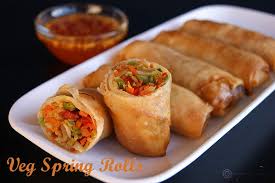
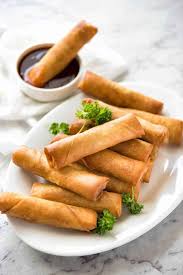
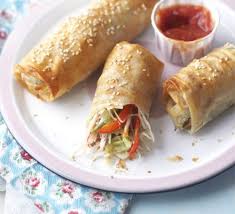
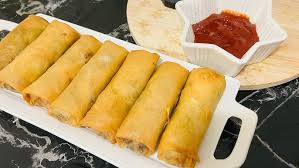
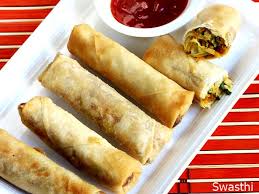
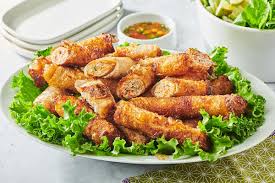
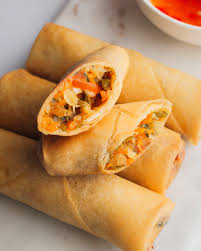
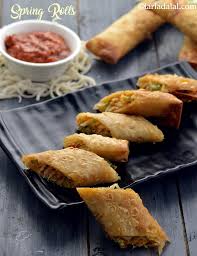
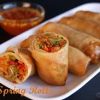
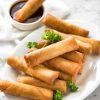
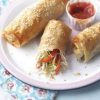
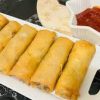
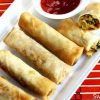
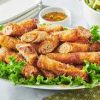
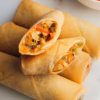
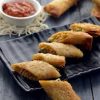
Spring rolls originated as a pancake filled with spring vegetables, which were a welcome change from the preserved foods eaten during the winter. The name comes from the association of vegetable snacks with the Spring Festival, which marks the beginning of spring in the Chinese lunar calendar.
Spring rolls are rolled appetizers or dim sum commonly found in Chinese, Vietnamese and Southeast Asian cuisines. The kind of wrapper, fillings, and cooking technique used, as well as the name, vary considerably depending on the region’s culture, though they are generally filled with vegetables.
Spring rolls are a seasonal food consumed during the spring, and started as a pancake filled with the new season’s spring vegetables, a welcome change from the preserved foods of the long winter months. In Chinese cuisine, spring rolls are savoury rolls with cabbage and other vegetable fillings inside a thinly wrapped cylindrical pastry. They are usually eaten during the Spring Festival in mainland China, hence the name. Meat varieties, particularly pork, are also popular. Fried spring rolls are generally small and crisp. They can be sweet or savoury; the former often with red bean paste filling, and the latter are typically prepared with vegetables. They are fully wrapped before being pan-fried or deep-fried.
Non-fried spring rolls are typically bigger and more savoury. Unlike fried spring rolls, non-fried ones are typically made by filling the wrapping with pre-cooked ingredients. Traditionally, they are a festive food eaten during the Cold Food Day festival and the Tomb Sweeping Day festival in spring to remember and pay respect to ancestors. The Hakka population sometimes also eats spring rolls on the third day of the third month of the lunar calendar . The wrappings can be a flour-based mix or batter.
Spring rolls are low in carbohydrates and fat, and high in fiber, vitamins, and minerals.


Reviews
There are no reviews yet.