







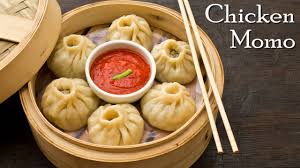
Momo is an ethnic food of Himalayan communities. Momo is a steamed dumpling made from wheat dough flat and stuffed with minced meats, vegetables, spices and herbs usually served with chutneys/ pickles/sauces/meat broth/ soup.
Origins in Tibet: Momos are believed to have originated in Tibet, a region located in the Himalayas. They were traditionally part of Tibetan and Nepalese cuisine and were an integral part of the local culinary traditions. The word “momo” is said to have Tibetan roots, meaning “steamed bread” or “dumpling.”
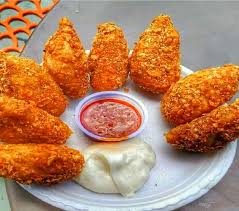
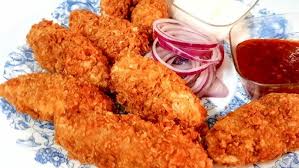
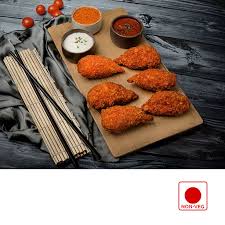
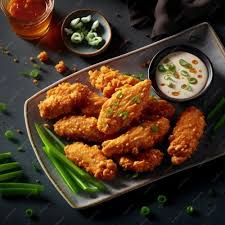
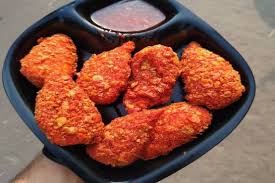
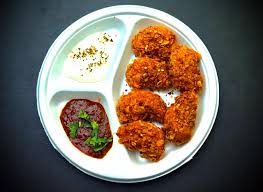
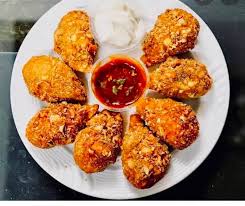
Fried kurkure momos 5pc- 495. calories. Protein – 5g. Carbohydrate – 60g.
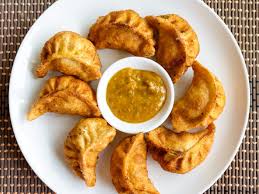
Momos are a type of steamed filled dumpling in Tibet, Nepal, Bhutan and India. Momos are usually served with a sauce known as achar with spices and herbs. It can also be cooked as soup versions known as jhol momo.
/ˈmoʊ.moʊ/ plural momo or or momos. a type of Tibetan, Nepalese, or North Indian dumpling (= a small piece of dough or pastry) that is filled with meat, fish, or vegetables with herbs and spices and cooked in steam: Since we’d come for momo, we ordered three types – veggie, chicken and beef.
As a traditional Tibetan dish, momos have evolved to incorporate various ingredients and flavors to suit different palates, making them a popular food choice for both vegetarians and meat-eaters alike.
Momo is a dumpling made of all-purpose flour and filled with either meat or vegetables. Inspired by Tibetan dumplings, the dish is a very popular Nepali street food. In Nepal the most common type of momos are buff (buffalo) momos followed by chicken.
The humble Momo, itself, has a long and rich history. It has travelled across many geographies, evolving with each stop it made. Momos are said to have originated in the 14th century. Considering their immense popularity, it is no surprise that both Nepal and Tibet claim to be their birthplace.
Reviews
There are no reviews yet.